




Top Career Opportunity For B.Pharma Graduates in Pharmaceutical Companies

B.pharma Graduates

Introduction

A Bachelor of Pharmacy (B.Pharm) degree can lead to a variety of job prospects in the healthcare  industries and pharmaceutical companies. As healthcare services and drug advances expand, the demand for B.Pharma graduates stays high. This degree provides students with a thorough understanding of drugs, their uses, and their effects, making them great assets in a variety of professional settings. Whether you want to work in direct patient care, research, regulatory affairs, or sales, there is a career path that is right for you.

One of the most popular job paths for B.Pharma graduates is to become a chemist. Pharmacists play an important role in healthcare since they dispense prescriptions, advise patients on correct pharmaceutical usage, and ensure overall patient safety. They work in a variety of settings, including retail pharmacies, hospitals, and clinics.

Another viable job path is as a pharmaceutical sales representative, where B.Pharma graduates can use their knowledge to market and sell pharmaceuticals to healthcare professionals. This job include developing contacts with doctors and chemists, organising product presentations, and meeting sales targets.

Career or Job Opportunities after Earning a Bachelor of Pharmacy Degree
B.pharma Graduates

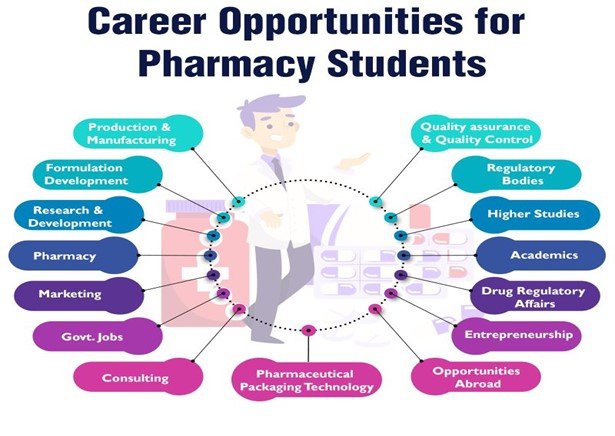
By 2030, the Indian pharmaceutical manufacturing industry is anticipated to be worth US$ 120-130 billion, and US$ 65 billion by 2024. Students who finish a pharmacy course have a variety of job opportunities. Their educational background makes their career opportunities incredibly diversified and adaptable. They may work as a pharmacist or for a pharmaceutical companies. Both the public and private sectors provide several options for students. The government sector may be a career option for you. In addition, you can work for an international company.
Graduates may work at government hospitals, private hospitals, clinics, or private medical businesses. You can also open your own consultation or medical shop.
After completing a B Pharmacy programme, graduates can pursue a range of rewarding occupations, including:

Pharmaceutical Industry:

B.pharma Graduates

1. Pharmacist.

One of the most popular job routes for B.Pharma graduates is to become a licenced chemist. Pharmacists play an important role in healthcare by delivering pharmaceuticals, advising patients on correct prescription usage, and guaranteeing their safety. They work in a variety of environments, including retail pharmacies, hospitals, and clinics.


Key responsibilities:

Dispensing prescription drugs.
Offering patient counselling and education.
Monitor patient health and drug therapy.
Ensure the safe and effective use of pharmaceuticals

Skills Required:

Strong understanding of drugs and their effects.
Excellent communication and interpersonal abilities.
Strong attention to detail and problem-solving ability.

2.Pharmaceutical Sales Representative.

Pharmaceutical sales agents, or medical representatives, promote and sell pharmaceutical products to healthcare professionals. They serve as a liaison between pharmaceutical companies and healthcare practitioners, facilitating the acceptance of innovative medications and therapies.

Key responsibilities:

Promoting pharmaceutical products to physicians, pharmacist, and other healthcare professionals.
Organise product presentations and demonstrations
Developing and maintaining client connections
Meeting sales targets


Skills Required:

Strong communication and negotiation abilities.
Excellent awareness of pharmaceutical products and market dynamics
Capability to establish and maintain professional relationships.
Self-motivation and Resilience.


Research and Development (R&D).


3.Pharmaceutical Research Scientist:

A career as a pharmaceutical research scientist can be quite fulfilling for those who enjoy the scientific side of pharmacy. These experts operate in laboratories to create new drugs, improve existing ones, and carry out research studies.

Key responsibilities:

Designing and conducting experiments
Data Analysis and Interpretation
Developing novel pharmaceutical formulations.
Clinical trials to assess drug safety and efficacy

Skills Required:

Strong analytical and problem-solving abilities.
Attention to detail and precision.
Knowledge of laboratory techniques and equipment.
Ability to operate individually and in teams.

4.Clinical Research Associates (CRA)

Clinical research associates manage clinical trials of new medications, ensuring that they conform to regulatory criteria and standards. They play an important role in the development of new drugs and therapies.

Key responsibilities:

Monitoring clinical studies to ensure conformity to procedures
Collecting and analysing trial data
Coordinate with clinical sites and investigators.
Ensure the safety and rights of trial participants.

Skills Required:

Strong organisational and management skills.
Understanding of clinical trial regulations and guidelines.
Strong communication and interpersonal abilities, with a focus on details.
Good documentation and reporting skills.

Regulatory Affairs

B.pharma Graduates

5.Regulatory Affairs Specialist.

Regulatory affairs professionals guarantee that pharmaceutical products adhere to all norms and criteria established by regulating organisations. They develop and submit drug approval papers while also staying up to current on regulatory changes.

Key responsibilities:

Preparation and submission of regulatory documents
Ensure conformity with regulatory norms.
Communicating with regulatory authorities
Keeping up with changes in regulations and norms.

Skills Required:

Detailed understanding of regulatory requirements and standards
Strong organisational and documentation skills.
Strong communication and bargaining skills, with a focus on details.

Quality Control and Assurance

6.Quality Control (QC) Analyst.

Quality control analysts evaluate and check pharmaceutical items to ensure they meet quality standards and requirements. They play an important role in ensuring pharmaceutical safety and efficacy.

Key responsibilities:
conducting testing and inspections on pharmaceutical products
Analyse test results and ensure compliance with quality requirements.
Identifying and addressing quality issues
Documenting and reporting findings.

Skills Required:
Strong analytical and problem-solving abilities.
Understanding of laboratory techniques and quality control procedures.
Proficient in documenting and reporting, with a strong focus on detail.

7.Quality assurance (QA). Specialist
Quality assurance professionals guarantee that the methods used in the manufacture of pharmaceutical products adhere to set standards and regulations. They aim to optimise manufacturing processes and avoid quality problems.

Key responsibilities:
Creating and implementing quality assurance policies and processes.
Conduct audits and inspections of manufacturing processes
Identifying and addressing quality concerns
Training employees on quality standards and processes.

Skills Required:
Strong organisational and management skills.
Understanding of quality assurance principles and laws.
Excellent communication and training skills, with a strong focus on detail.

Academics and Education

8.Lecturer / Professor

A career in academics can be rewarding for B.Pharma graduates who enjoy teaching. Lecturers and professors instruct pharmacy students, perform research, and help to enhance pharmaceutical education.

Key responsibilities:
Educating and mentoring pharmacy students
Conducting study and publishing findings.
Responsibilities include curriculum development, committee participation, and academic activities.

Skills Required:
Strong knowledge of pharmacy issues.
Excellent communication and teaching skills.
Ability to undertake research.
Organisational and management skills

Hospital and Clinical Pharmacy

9.Clinical Pharmacist

Clinical pharmacists work in hospitals, partnering with healthcare teams to improve patient pharmaceutical treatments. They provide direct patient care, conduct medication reviews, and verify that medications are used safely.

Key responsibilities:
Reviewing and managing patients’ pharmaceutical treatments.
Working with healthcare teams to optimise treatment plans.
Patients receive medication counselling and instruction.
Monitor patient results and change therapy as required.

Skills Required:
Strong clinical knowledge and decision-making abilities.
Effective communication and interpersonal abilities.
Capable of working as a team and paying attention to detail.

Biotechnology & Biopharmaceuticals

10.Biotech Scientist

B.Pharm graduates can pursue professions in biotechnology and biopharmaceutical companies, developing medications, vaccines, and cures. These scientists use their pharmacy knowledge to create innovative therapies.

Key responsibilities:

conduct research and development of biological goods.
Analysing data and creating new pharmacological formulations
Conducting preclinical and clinical studies.
Working with multidisciplinary teams

Skills Required:
Strong analytical and problem-solving abilities.
Understanding of biotechnology and biopharmaceutical principles.
Requirements include attention to detail and teamwork skills.

Top Companies Hiring B-Pharmacy Graduates
As a B Pharmacy graduate, you can get pharmaceutical work at top businesses both in India and abroad. There are numerous employment openings accessible; all that is required is the perfect combination of talents, dedication, and company to compete. Here are the top 5 pharmaceutical businesses where you can get your preferred job profile:
1. Cipla.
2. Reddy’s Laboratories.
3. Lupin
4. Glenmark Pharmaceuticals
5) Novartis

Conclusion
A B.Pharma degree provides a diverse range of job prospects in the pharmaceutical and healthcare industries. Whether you want to work in direct patient care, research and development, regulatory affairs, quality control, or academia, there is a rewarding career for you. By exploiting your skills and knowledge, you may find the finest employment after B.P harm that matches your interests and objectives. With the increasing demand for healthcare services and the ongoing advancements


Important Links

More Posts

Important Factors to Check Before Taking Admission in a Pharmacy College

Important Factors to Check Before Taking Admission in a Pharmacy College

Choosing the best pharmacy college not only means getting admission into one but also building up a solid base for one’s future career in the pharmaceutical industry. With increasing opportunities in research, clinical practice and drug development, candidates must do a proper analysis and planning before taking admission in a pharmacy college. 

So if you’re exploring options, especially among the top pharmacy colleges in Dehradun then here are some of the most important factors you should evaluate before finalising your decision.

1. Accreditation & Affiliation

The first and most critical factor in your pharmacy college admission criteria checklist should be accreditation. So make sure that the institution is:

  • Accredited by the Pharmacy Council of India
  • Affiliated to a recognised university

Accreditation ensures that the course curriculum is up to par and will help you get a valid degree that can be used for employment or higher academic studies.

2. Course Curriculum & Specialisations

Pharmacy is an evolving scientific field and an effective curriculum will make your learning journey more enjoyable. Thus, before choosing a college to study at, look into:

  • Core subjects and electives offered
  • Different specialisations available
  • If there’s practical teaching and project work involved

Remember that a good curriculum will combine theory and practice to equip students to face any challenge in the pharmacy industry.

3. Faculty Expertise & Their Teaching Methods

Qualified and experienced teachers can contribute immensely to your academic path. So make sure to consider:

  • The credentials and industry experience of the teachers
  • Methods of instruction (case study method, laboratory sessions, industrial tours)
  • Teacher-to-student ratio

Educational institutions that offer good academic guidance tend to produce more confident individuals who are ready for the industry.

4. Infrastructure & Laboratory Facilities

Practical training plays an important role in pharmacy education. Well-developed infrastructure and laboratories are something that cannot be taken for granted because the hands-on experience that one gets in laboratories plays a crucial role in bridging the gap between theoretical knowledge and practical application. Hence, make sure to look for:

  • High-quality laboratory equipment
  • Facilities for conducting research
  • Libraries

5. Industrial Exposure & Internship Programs

Industry exposure in the real world is yet another very important point that must not be neglected while making the selection of a suitable pharmacy college. Thus, while considering the different options for pharmacy college admission, make sure that the institution you choose:

  • Has tie-ups with various pharmaceutical companies as well as hospitals
  • Offers internship programs and industrial training sessions
  • Invites industry experts to deliver guest lectures and conduct workshops

What early industry exposure does is that it increases the employability chances of the students and enables them to gain better insight into their careers.

6. Placement Support & Career Opportunities

A college’s past placement record is a strong indicator of its credibility and integrity. Thus, before making any decision make sure to consider:

  • Previous years’ placement data and average salaries offered
  • Top recruiters visiting the campus
  • Career guidance and training programs

Many of the top pharmacy colleges in Dehradun often have dedicated placement cells that actively connect students with leading pharmaceutical companies.

7. Location & Campus Environment

While it may seem totally unrelated, the location of the college makes your overall experience at the institute better. A city like Dehradun offers:

  • A peaceful academic environment
  • Proximity to research institutions and healthcare facilities
  • Better quality of life for students

All this eventually contributes significantly to a student’s academic focus and personal growth

8. Fee Structure & Financial Support

This is yet another important point to be considered. When choosing colleges, you will need to keep in mind:

  • Fees charged by the institutions
  • Financial aid available
  • ROI on placements

Remember that the ideal college for you will be the one that will always provide good value for money without affecting the standard of education.

9. Alumni Network & Reputation

Having an extensive alumni network may provide mentoring and job opportunities. So make sure to consider the following factors:

  • Alumni success within the pharmaceutical industry
  • Industry connections
  • The college’s reputation among academia and professionals

Remember that a good reputation usually indicates consistent academic success and industry trust.

10. Research & Development Opportunities

The field of pharmacy is highly associated with research and development. So in case you wish to pursue further education or join R&D, go for an educational institution offering the following:

  • Research projects and publications
  • Opportunities for collaborations with research organisations
  • Innovation-driven learning environment

Getting exposure to research from an early stage will definitely give you an edge.

11. Student Support & Co-Curricular Activities

Higher education at a college is not limited to academics which is why you should also look for:

  • Student counselling and mentorship programs
  • Clubs, seminars and competitions
  • Opportunities for leadership and skill development

Availability of such programs ensures a student’s overall personality development and confidence-building.

12. Admission Process Transparency

Lastly, ensure that the criteria for admission into the pharmacy college are clearly stated.  A trustworthy college should clearly state:

  • The eligibility criteria
  • Entrance examination (if any)
  • Documentation needed

Ensure you do not enrol in institutions whose admission process is vague.

Conclusion

Now when all these abovementioned factors are taken into consideration, KIITS College in Dehradun stands as a strong and solid option for aspiring pharmacy students.

KIITS offers comprehensive learning opportunities combining academics and training. With competent tutors and excellent laboratory facilities, the college plans on ensuring that its students acquire sufficient skills and knowledge in order to fit into the employment market. Through various internship programs, the institution helps the students develop all the skills needed for them to succeed in the pharma industry.

Read More:- The Benefits of B Pharma Course at KIITS College


Why Internships Are Crucial for Pharmacy Students?

Why Internships Are Crucial for Pharmacy Students?

If you are a science student who did not appear for the NEET exam or did not perform as expected, you might be thinking to yourself: 

Can we do B Pharma without NEET?

Well, the answer is: Yes, you absolutely can!

But, of course, there’s more to it than just a simple yes or no. There are admission processes, eligibility criteria, entrance exams and career opportunities – all of these matter before you make a decision.

So let’s sit down and clear the confusion properly.

The Difference Between Theory and Practice in Pharmacy Education

Pharmacy education is strong in theory. Students learn about:

  • Pharmacology 
  • Pharmaceutics 
  • Medicinal chemistry 
  • Drug interactions 
  • Dosage forms 
  • Regulatory guidelines 

But the real world is not a written exam.

In real settings, pharmacists deal with:

  • Real patients 
  • Real prescriptions 
  • Real-time decisions 
  • Time pressure 
  • Communication challenges 
  • Unexpected situations 

This gap between classroom learning and real-world application is exactly why the importance of internships in pharmacy cannot be ignored.

Internships are where knowledge becomes skill.

What Actually Happens During Pharmacy Internships

Many students assume internships are just about observing. But a well-structured internship goes much deeper.

Depending on the hospital, retail pharmacy or pharmaceutical company, students get exposure to:

  • Prescription handling 
  • Drug dispensing 
  • Patient counselling 
  • Inventory management 
  • Quality control processes 
  • Laboratory practices 
  • Documentation and compliance 
  • Understanding real healthcare workflows 

This exposure helps students understand not just what to do but also how and why to do it.

Other than this, here’s how internships turn out to be important for pharmacy students.

1. Builds Confidence in Real Situations

In classrooms, mistakes cost marks.
In real life, mistakes can affect health.

That is why confidence matters.

Pharmacy internships help students:

  • Handle real prescriptions 
  • Interact with patients 
  • Understand medication usage 
  • Ask questions in real scenarios 
  • Make decisions under supervision 

In the long run, this helps build self-confidence which is what separates a student from a professional.

2. Helps in Understanding the Role of a Pharmacist

Many students enter the field of pharmacy not knowing much about the duties of a pharmacist in various circumstances.

The internship helps students the different duties of:

  • Hospital pharmacist
  • Clinical pharmacist
  • Retail pharmacist
  • Industrial pharmacist
  • Research associate
  • Quality control analyst

This clarity helps students make better career decisions. Because once you experience different roles, you can decide: “This is where I see myself.”

3. Helps in Learning Patient Interaction


Pharmacy is not just about medicines. It is also about people.

Patients may:

  • Be confused about prescriptions 
  • Have doubts about dosage 
  • Feel anxious about side effects 
  • Need reassurance 

Internships teach students how to:

  • Communicate clearly 
  • Listen patiently 
  • Explain medicines simply 
  • Build trust with patients 

These are skills no textbook can fully teach.

4. Provides Exposure to Real Healthcare Systems

Healthcare systems are composed of various professionals such as doctors, nurses, technicians and pharmacists who work together.

Internships help students know:

  • How prescriptions are made 
  • How medicines move through the system 
  • How pharmacists coordinate with doctors 
  • How hospitals manage patient care

This system-level understanding is essential for anyone planning a long-term career in pharmacy.

5. Improves Chances of Employability

One of the biggest advantages of internships is that they make students more job-ready.

Employers usually prefer people who:

  • Are experienced 
  • Know how things work 
  • Need minimal training 
  • Can start working right away 

Students who have done internships usually get an advantage in the job application process. And this is where pharmacy internships directly impact placement opportunities.

6. Develops Professional Discipline

Internships introduce students to:

  • Timelines 
  • Responsibility 
  • Accountability 
  • Workplace behaviour 
  • Professional ethics 

Students learn:

  • How to be punctual 
  • How to handle pressure 
  • How to maintain accuracy 
  • How to work in a team

These habits stay with them throughout their careers.

7. Helps Students Discover Strengths and Weaknesses

Internships are also a mirror. Students often discover:

  • What they are good at 
  • What they need to improve 
  • What kind of work they enjoy 
  • What kind of environment suits them 

This self-awareness helps them:

  • Choose the right specialization 
  • Focus on skill development
  •  Prepare better for future roles

8. Prepares for What Lies Ahead

Pharmacy is a field where accuracy, responsibility and knowledge come together.

A small mistake can have serious consequences.
A small act of clarity can help a patient recover better.

This is why students need more than theoretical knowledge.

They need:

  • Practical understanding 
  • Confidence 
  • Experience 
  • Communication skills 
  • Professional discipline 

And this is exactly what internships provide.

Not All Internships Are the Same

While internships are important, the quality of an internship matters just as much.

Therefore, the students should look for:

  • Structured internship programs 
  • Proper guidance and supervision 
  • Exposure to real work 
  • Opportunities to ask questions 

• Learning-focused environments 

The Role of the Right College

Many students depend on their college to provide internship opportunities. This is where the choice of institution becomes crucial.

A good pharmacy college ensures:

  • Strong hospital or industry tie-ups 
  • Regular internship opportunities 
  • Practical exposure alongside theory 
  • Faculty guidance during internships 

• Skill development beyond academics 

Final Thought

Pharmacy education begins in the classroom. But it is completed in the real world. And that’s why internships are not just a need. They are a bridge. A bridge between:

  • Knowledge and application 
  • Theory and practice 
  • Student and professional 

And the stronger this bridge is, the smoother the journey becomes. Because in the end, pharmacy is not just about understanding medicines. It is about being ready to use that understanding where it truly matters.

Keeping that philosophy in mind, institutions like KIITS focus on building strong academic foundations while also ensuring students get the practical exposure they need through structured internship opportunities and industry connections.

Such an approach helps students not just complete their course but also prepare for what comes after.


Read More:-Internship Experiences for D.pharma Students

Scroll to Top