

KIITS Pharmacy College in Dehradun: A Day in the Life of a Pharmacy Student

Pharmacy College in Dehradun

KIITS Pharmacy College in Dehradun

Pharmacy College in Dehradun

Ever wanted to know what its like being in pharmacy student shoes? The journey of a pharmacy student is a multifaceted one, running the full spectrum from early-morning lectures to late-night study sessions somewhat reminiscent of friendship (tv show about underemployed thirty somethings living in the big city). Let’s have a look at whats happening in the lives of pharmacy students at KIITS Pharmacy College Dehradun on daily basis.

Morning Routine

Pharmacy College in Dehradun

The pharmacy (B.pharma and D.pharma) students of KIITS have to get up early in the morning. Students move into lecture rooms for lectures, as the rays of sun come up over a peaceful university campus. Every workshop — from pharmacology to medicinal chemistry — provides detailed scientific learning that is paramount for the students of tomorrow!

Hands-on Learning
Pharmacy College in Dehradun

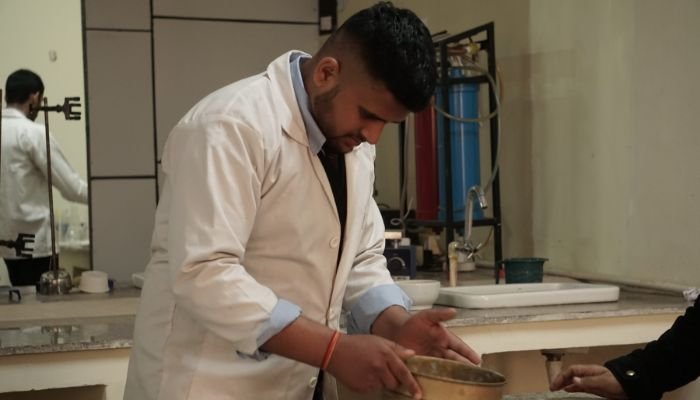
Next are laboratory practicals after classes. Students here can get their hands dirty with labs, working on compounding medications, case studies regarding drug interactions, and even pharmaceutical research. With experienced Faculty members by their side, students are offered great hands on training to deal with real-world problems faced in Pharmacy practice.

Lunch Break

Between the rushing and running, pharmacy students get a chance to take 30 minutes or so for themselves. Lunchtime — whether spent on a meal with friends in the campus cafeteria, or getting a quick bite in between classes — is also an opportunity to relax and socialize among your peers.

Clinical Rotations

In the afternoons, pharmacy students enter into clinical rotations and start training in hospitals, clinics, community pharmacies. They work here, with medical professionals, learning to take care of patients and how to counsel on medications and administer their own health services. Clinical rotations offer a sneak peek into the many faces of pharmacy practice through medication reconciliations and patient rounds, oh my!

Study Sessions at KIITS Pharmacy College in Dehradun

After work begins to wrap up for the day, pharmacy students end up retreating back to the library. Armed with text books, journals and research papers they dive into detail involving pharmacotherapy, pharmacokinetics and pharmaceutical care. Studying – whether exam preparation, assignment writing or literature review— is ingrained in the life of every student of KIITS Pharmacy College in Dehradun.

Extracurricular Activities

Beyond academics, pharmacy students at KIITS participate in a myriad of extracurricular activities. From student-led clubs and organizations to community service initiatives and professional development workshops, there are endless opportunities for students to explore their interests, hone their skills, and make meaningful contributions to society.

Reflection and Rest

We paused to celebrate the hard work and dedication of our future pharmacists. Every day is a new canvas, celebrating success and learning from challenges has been the everyday at work. A day left satisfied…. As we slowly begin to make our way into compassionate and competent pharmacists, they take away their hearts filled and minds enriched in the journey.

Unique Challenges and Rewards

Pharmacy College in Dehradun — KIITS, amidst the glamorous horn of pharmacy success a two-wheeler driving pharmacy student forges through we enter in this world and it is full of sorrows that cries come straight from hearts even imaginations are made. Balancing school workloads, projects, and extracurricular activities can be difficult to do so in a way that requires a lot of time management and organization. Furthermore, since pharmacy is always evolving (new drugs, new treatments and new laws), as a result having to learn more while on the job.

However, converging with these are multitude gains and massive opportunities for learning both personally and professionally. Pharmacists and pharmacy students, as this article points out quite well in fact, do many good things to make the lives of patients better by providing important healthcare services that improve our quality of life.

Not only this, but the comradeship and support within the pharmacy community create a belongingness and cooperation. Study groups, mentorship programs and peers as well as faculty encourage students to take advantage of one another. The way any pharmacy student’s journey is never the final pursuit of knowledge but an interminable continuance to establish enduring bond, share experiences with one another and motivate others, I hope you find motivation in these dispensary as to rise up above to improve.

As pharmacy students at KIITS Pharmacy College in Dehradun, you are part of a dynamic group of committed to innovation and excellence in education and service. KIIT offers an environment that nurtures, encourages and leads students to recognize their potential with top-notch infrastructure facilities along with qualified faculty members providing value based holistic education.

In conclusion, the life of a pharmacy student at KIITS Pharmacy  College in Dehradun is a vibrant tapestry of learning, exploration, and service. From classrooms to laboratories, from hospitals to communities, students embrace each day with passion, dedication, and a commitment to excellence. As they continue to navigate the path ahead, they carry with them the knowledge, skills, and values instilled by their alma mater, shaping the future of pharmacy with every step they take.


Important Links

More Posts

Pharmacovigilance as a Career: What It Is, Scope & How to Get Started

Pharmacovigilance as a Career: What It Is, Scope & How to Get Started

Most pharmacy students spend the first year or two of their degree learning about how medicines work, how they’re made and how they’re dispensed. What few of them think about early on is what happens after a drug is already on the market — who is responsible for monitoring whether it’s doing what it’s supposed to do and what happens when it isn’t.

That’s where pharmacovigilance comes in. And for pharmacy graduates looking at pharmacovigilance as a career, it’s one of the most underexplored, high-potential directions the degree can take you.

What Is Pharmacovigilance?

Pharmacovigilance is the science of detecting, assessing, understanding and preventing adverse effects or any other drug-related problems. In simpler terms, it’s the system that monitors medicines after they’ve been approved and released for public use — to make sure they remain safe, effective and appropriate for the people using them.

Before a drug reaches the market, it goes through clinical trials. But those trials involve a relatively limited number of people over a defined period of time. Once a drug is prescribed to millions of patients across different ages, health conditions and combinations of other medications, unexpected effects can and do emerge. Pharmacovigilance is the field that catches these — through systematic data collection, adverse event reporting, signal detection and communication with regulatory bodies.

The World Health Organization runs an international drug monitoring programme and every country has its own regulatory system for pharmacovigilance. In India, this is managed by the Pharmacovigilance Programme of India (PvPI), coordinated by the Indian Pharmacopoeia Commission under the Central Drugs Standard Control Organisation (CDSCO).

Why Pharmacovigilance Is Growing as a Career Field

The pharmaceutical industry is global, highly regulated and expanding rapidly. Every drug marketed in any major country — the US, the EU, India, the Gulf states — must meet strict pharmacovigilance requirements set by the regulatory authority of that country. Companies that fail to meet these requirements face serious consequences including product withdrawal, regulatory action and significant financial penalties.

This regulatory pressure has created consistent, growing demand for trained pharmacovigilance professionals at every stage — from data entry and case processing to signal detection, risk management and regulatory submissions. And because pharmacovigilance functions are required across the entire life of a drug’s market presence, the demand doesn’t fluctuate with economic cycles the way some other sectors do.

India has become a significant hub for pharmacovigilance services with many global pharmaceutical companies outsourcing their drug safety operations to Indian Contract Research Organisations (CROs). Companies like IQVIA, Syneos Health, Parexel, Covance and several domestic pharmaceutical firms actively recruit pharmacovigilance professionals from India — making it a career path with both domestic and international dimensions.

Pharmacovigilance as a Career — Roles and What They Involve

The field has a range of roles depending on experience and specialisation. Here’s what the career landscape typically looks like:

  • Drug Safety Associate / PV Associate — entry-level role focused on processing individual case safety reports (ICSRs), reviewing adverse event data and ensuring compliance with regulatory reporting timelines. This is where most pharmacovigilance careers begin.
  • Medical Writer (Drug Safety) — preparing periodic safety update reports (PSURs), risk management plans and other regulatory documents. The role requires strong writing skills alongside scientific knowledge.
  • Signal Detection Analyst — analysing patterns in adverse event databases to detect new or changing safety signals for drugs already on the market.
  • Pharmacovigilance Manager / Team Lead — overseeing case processing teams, managing client relationships (in CRO settings) and ensuring regulatory compliance across product portfolios.
  • Regulatory Affairs Specialist (PV) — managing submissions to regulatory bodies and maintaining compliance with country-specific pharmacovigilance requirements.

If you want to understand how pharmacovigilance intersects with broader regulatory responsibilities, our blog on navigating regulatory affairs in the pharmaceutical industry gives useful context on how these two functions work alongside each other.

Eligibility and Qualifications

The primary qualification for entering pharmacovigilance is a pharmacy degree — B.Pharma or D.Pharma — along with a strong understanding of pharmacology, drug interactions and clinical terminology. A science background from 12th (PCB) is the standard entry requirement.

While a basic pharmacy degree is sufficient for entry-level roles, candidates who pursue additional certification in pharmacovigilance — through programmes offered by organisations like ISPOR or short courses offered by pharma training providers — tend to get noticed faster in a competitive hiring process.

Some candidates also combine their pharmacy degree with a postgraduate qualification in clinical research which opens doors to a broader range of drug development roles alongside PV.

Salary Expectations

Entry-level pharmacovigilance roles in India typically start between ₹3 to ₹5 LPA with salaries at CROs and multinational pharmaceutical companies often at the higher end of that range.

With three to five years of experience, a pharmacovigilance professional can expect to earn between ₹7 to ₹15 LPA depending on the role and employer. Senior managers and specialists in signal detection or regulatory affairs can earn considerably more especially in international organisations.

For professionals who work with global CROs or move into international roles — which is a realistic outcome given India’s position in the global PV services market — salaries are considerably higher still.

How to Get Started After Pharmacy

The path to a pharmacovigilance career follows a clear sequence. First, build a strong foundation in pharmacology, drug interactions and clinical terminology during your pharmacy degree — these are the building blocks that every pharmacovigilance role relies on.

If you want a clear picture of what that foundation-building actually looks like in a pharmacy program, our blog on a day in the life of a pharmacy student at KIITS gives an honest and detailed look at the academic and practical experience.

After graduating, supplementing your degree with a short pharmacovigilance course or certification significantly improves your chances of landing an entry-level role. Building familiarity with adverse event reporting databases — MedDRA, WHO-ART and tools like ARISg or Argus Safety — is also useful before going into interviews.

As a career after pharmacy, pharmacovigilance rewards consistency and attention to detail more than most fields. Entry-level roles involve a great deal of careful data processing and regulatory documentation work. Those who build accuracy and efficiency early tend to move up faster.

Is Pharmacovigilance a Good Long-Term Career Choice?

The honest answer is yes — for the right kind of person. If you enjoy working with data, are detail-oriented, understand scientific and clinical language and are interested in the regulatory and safety dimensions of medicine rather than the clinical or manufacturing sides, pharmacovigilance is a field that offers genuine long-term career security, good compensation progression and international mobility.

It’s not a field that gets much attention in pharmacy career counselling sessions which is partly why it remains less saturated than some other pharmaceutical career paths — and why those who enter it with proper preparation tend to do well.

Conclusion

Pharmacovigilance is a field built around one of the most important questions in medicine: is this drug still safe? It’s rigorous, detail-driven, globally relevant and growing — and for pharmacy graduates who are willing to build the right foundation, it offers a career that is both financially rewarding and genuinely meaningful.

Kingston Imperial Institute of Technology and Sciences in Dehradun is where many pharmacy professionals in the region have built that foundation. The best pharmacy course in Dehradun for students aspiring to careers in pharmacovigilance, regulatory affairs or broader pharmaceutical industry roles starts with a B.Pharma program that genuinely invests in pharmacological depth, practical laboratory training and an understanding of how the pharmaceutical world actually operates — not just the textbook version of it.

Established in 2002 and affiliated with the Pharmacy Council of India, Uttarakhand Technical University and H.N.B. Uttarakhand Medical Education University, KIITS offers a B.Pharma curriculum that covers pharmacology, pharmaceutical chemistry and clinical sciences which directly builds on pharmacovigilance work. Faculty who bring real industry awareness into the classroom, well-equipped labs and a focus on producing graduates who are genuinely work-ready — rather than just examination-ready — make KIITS a strong starting point for anyone serious about a pharmaceutical career.

So if pharmacovigilance is the direction you want to go, the foundation matters. And at KIITS, that foundation is built with the depth and seriousness the field demands.

Why Accreditation Matters in Pharma College Admission?

Why Accreditation Matters in Pharma College Admission?

If you are filling out pharmacy college applications right now, there is a good chance you are paying attention to things like fees, hostel facilities, campus photos and placement claims. All of that matters but there is one factor that quietly decides whether your degree will actually mean something once you step out — accreditation.

Accreditation in pharma college admission is not just a formality buried in the fine print of a prospectus. It determines whether your degree is recognised, whether you can register as a licensed pharmacist and whether you will even be eligible to sit for certain government or private sector jobs later on. Skip this check and you risk spending years and a fair amount of money on a degree that does not open the doors it should.

This blog breaks down what accreditation actually means, why it matters so much when choosing a college and how to verify it properly before you commit.

What Does Accreditation Mean in Pharmacy Education?

In simple terms, accreditation is official recognition that a college or course meets a defined standard of education, infrastructure and faculty quality. For pharmacy specifically, this recognition has to come from specific regulatory bodies — it is not something a college can claim on its own.

In India, pharmacy accreditation typically involves approval from bodies such as:

  • The Pharmacy Council of India (PCI) which regulates pharmacy education and is mandatory for any college offering D.Pharma or B.Pharma programs
  • The All India Council for Technical Education (AICTE) which approves technical and professional institutions
  • The respective State Technical Education Board or affiliating university which oversees curriculum and examinations
  • The State Pharmacy Council, relevant for registration after graduation

Without these approvals, a college may still operate and admit students but the degree it issues may not be valid for practical purposes like registering as a pharmacist or applying to certain jobs.

Why Accreditation Should Be Your First Filter

Most students start their college search by looking at rankings, location or fee structure. Accreditation should come before all of that because it affects almost everything else down the line.

Your degree needs to be recognised to mean anything. A B.Pharma or D.Pharma degree from a non-accredited college will not be accepted by the Pharmacy Council of India for registration. Without registration, you cannot legally practise as a pharmacist, no matter how good your actual education was.

Government job eligibility depends on it. Most government pharmacist positions, hospital roles and public sector pharmaceutical jobs require candidates to hold a degree from a PCI and AICTE approved institution. An unaccredited degree simply gets filtered out at the application stage.

Higher education options narrow without it. If you plan to pursue M.Pharma, PhD or any postgraduate specialisation later, most universities will only consider applicants whose undergraduate degree came from a properly accredited college.

Quality of education tends to follow accreditation. Accreditation bodies set minimum standards for labs, faculty qualifications, library resources and curriculum design. Colleges that meet these standards are, more often than not, simply better equipped to teach you what you actually need to know.

Loan and scholarship eligibility is often tied to it. Many education loan providers and government scholarship schemes only approve funding for students enrolled in accredited institutions, since the degree’s validity is part of what secures the loan.

This is closely connected to a few other things students should evaluate before taking admission — things we have covered in more detail in our blog on important factors to check before taking admission in a pharmacy college.

How to Verify a College's Accreditation Before Applying

It is easy to take a college’s word for it when their website lists a bunch of logos and certifications. But verifying this yourself takes only a few minutes and can save you years of regret. Here is how to do it properly.

  • Visit the official Pharmacy Council of India website and search for the college’s name in their list of approved institutions
  • Check the AICTE portal to confirm the college holds a valid, current approval — not an expired or provisional one
  • Look up the affiliating university or state technical board to confirm the specific pharmacy program is recognised, not just the institution as a whole
  • Ask the college directly for their approval letters and affiliation certificates and cross-check the validity dates
  • Avoid relying only on a college’s own claims or marketing material — always verify through the regulator’s official source

This step matters just as much whether you are comparing colleges within Uttarakhand or looking at options across India.

Accreditation in Pharma College Admission 2026: What Has Changed

Regulatory checks around pharmacy education have become noticeably stricter over the past couple of admission cycles. The Pharmacy Council of India has tightened inspections around faculty-student ratios, lab infrastructure and teaching hospital tie-ups for colleges offering clinical components. Several colleges that previously operated on provisional approvals have either upgraded their infrastructure or lost recognition altogether.

For students applying in the current cycle, this means the accreditation in pharma college admission process today carries more weight than it did even a few years ago. A college’s approval status can change between academic years, so checking it fresh — rather than relying on outdated information from seniors or old college brochures — is genuinely important.

What This Means When You're Comparing Colleges

Once you have shortlisted a few colleges that pass the accreditation check, you are in a position to compare them on other factors that matter — faculty experience, lab facilities, internship tie-ups, hostel and campus environment and placement support.

This is really where the search for the best pharmacy college admission becomes meaningful. Accreditation tells you a college meets the baseline requirement. What you do beyond that — based on infrastructure, mentorship and real industry exposure — determines how well your time there is actually spent.

Conclusion

Choosing where to study pharmacy is a decision that affects your career long after graduation and accreditation is the one factor that decides whether your degree will actually hold value when it matters — during registration, while applying for jobs or when applying for further studies. It is not the only thing to look at but it is the first thing to confirm before anything else.

At KIITS, we have built our reputation as one of the best pharmacy college in Dehradun on exactly this foundation. We are recognised by the Pharmacy Council of India, AICTE, the Uttarakhand Board of Technical Education and affiliated with H.N.B. Uttarakhand Medical Education University and Uttarakhand Technical University. For students, this means every degree earned at KIITS carries the recognition needed to register as a pharmacist, apply for government and private sector roles and pursue higher studies without any roadblocks.

Beyond the paperwork, KIITS combines this regulatory standing with experienced faculty, well-equipped labs and a curriculum designed to prepare students for the realities of the pharmaceutical industry — not just the exam hall. So if you are evaluating where to take admission this year, starting with accreditation and then looking at what KIITS offers beyond it is a good place to begin.

Scroll to Top