



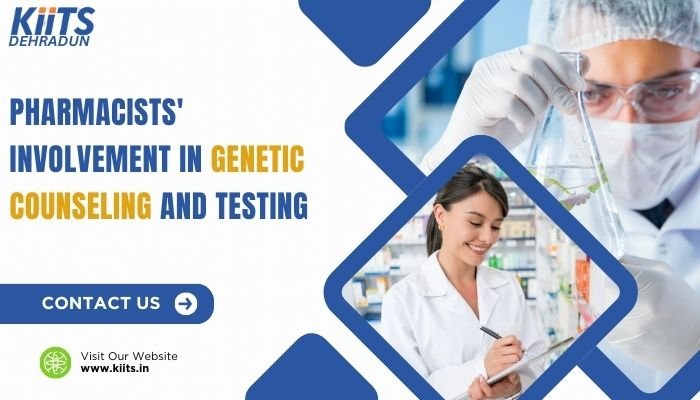
Pharmacists’ Involvement in Genetic Counseling and Testing

Genetic Counseling

Pharmacists are traditionally seen as healthcare professionals focused on dispensing medications and advising patients on their use. However, their role has been evolving, and one of the emerging areas where pharmacists are becoming increasingly involved is genetic counseling and testing. This involvement is pivotal in the era of personalized medicine, where treatments and preventive measures are tailored to the genetic makeup of individual patients. This article delves into the significance of pharmacists’ involvement in genetic counseling and testing, the benefits it offers, the skills required, and the future outlook of this expanding field.

The Role of Pharmacists in Genetic Counseling and Testing

Genetic Counseling

Pharmacists are well-positioned to play a crucial role in genetic counseling and testing due to their extensive knowledge of pharmacology, patient care, and the healthcare system. Their involvement may be labeled into numerous key areas:

  1. Patient Education and Counseling: Pharmacists can educate patients about the significance of genetic testing, what the tests entail, and how the results can impact their health and treatment plans. This involves explaining complex genetic information in a manner that is understandable to patients, helping them make informed decisions.
  2. Medication Management: With genetic testing, pharmacists can identify how individual genetic variations affect drug metabolism and response. This allows them to personalize medication regimens, adjusting doses or selecting alternative therapies to enhance efficacy and reduce adverse effects.
  3. Collaborative Care: Pharmacists work closely with genetic counselors, physicians, and other healthcare professionals to integrate genetic information into comprehensive care plans. This collaborative approach ensures that genetic testing is used effectively in diagnosing and managing various conditions.
  4. Ethical and Legal Considerations: Pharmacists can help navigate the ethical and legal complexities of genetic testing, ensuring patient confidentiality and informed consent. They play a role in addressing concerns about genetic discrimination and the proper use of genetic information.

Benefits of Pharmacists’ Involvement in Genetic Counseling and Testing

Genetic Counseling

The involvement of pharmacists in genetic counseling and testing offers numerous benefits for both patients and the healthcare system:

  1. Enhanced Patient Care: By incorporating genetic information into patient care, pharmacists can provide more precise and effective treatments. This reduces trial-and-error prescribing, leading to faster and better health outcomes.
  2. Improved Medication Safety: Pharmacogenomics, the study of how genes affect a person’s response to drugs, helps pharmacists predict adverse drug reactions and interactions. This enhances medication safety and reduces the risk of harmful side effects.
  3. Cost-Effective Healthcare: Personalized medicine can lead to more efficient use of healthcare resources. By tailoring treatments to individual genetic profiles, unnecessary treatments and hospitalizations can be minimized, reducing overall healthcare costs.
  4. Empowered Patients: Pharmacists’ involvement in genetic counseling empowers patients with knowledge about their genetic health. This enables patients to take an active role in their healthcare decisions and lifestyle choices.

Skills and Training Required for Pharmacists

Genetic Counseling

To effectively participate in genetic counseling and testing, pharmacists need specialized training and skills. These include:

  1. Genetic and Genomic Knowledge: Pharmacists must have a solid understanding of genetics, genomics, and pharmacogenomics. This includes knowledge of genetic testing methods, interpretation of test results, and their implications for drug therapy.
  2. Communication Skills: Effective communication is essential for explaining complex genetic information to patients and collaborating with other healthcare professionals. Pharmacists must be adept at simplifying scientific concepts and addressing patient concerns.
  3. Ethical and Legal Awareness: Pharmacists should be familiar with the ethical and legal aspects of genetic testing. This includes patient consent, confidentiality, and the ethical use of genetic information.
  4. Continuing Education: The field of genetics is rapidly evolving. Pharmacists must engage in continuous education to stay updated on the latest advancements and best practices in counseling and testing.

Case Studies and Examples

    • An anticoagulant with a low healing index is warfarin.

      An anticoagulant with a limited therapeutic index is warfarin. Variations in the CYP2C9 and VKORC1 genes can have a substantial effect on the organism’s metabolism and reaction. Genetic testing is a tool that pharmacists can use to customize warfarin therapy and lower the risk of bleeding or clotting issues.

      Case Study 2: Treatment for Breast Cancer:

      Genetic testing for BRCA1 and BRCA2 mutations can help determine the best course of treatment for breast cancer patients. When interpreting test results and offering advice on the usage of targeted treatments, like PARP inhibitors, pharmacists can be helpful.

  1. Case Study 3: Opioid Prescribing:

    • Genetic variations in the CYP2D6 gene affect the metabolism of opioids. Pharmacists can use genetic information to identify patients who may be at higher risk for opioid toxicity or poor pain control, allowing for safer and more effective pain management.

Emerging Trends and Obstacles

However, numerous demanding situations want to be addressed, with potential for significant advancements in personalized medicine. However, numerous demanding situations want to be addressed:

  1. Education and Training: There is a need for comprehensive educational programs to equip pharmacists with the necessary genetic and genomic knowledge. Integrating genetics into pharmacy curricula and providing continuing education opportunities are essential steps.
  2. Interdisciplinary Collaboration: Successful implementation of genetic counseling and testing requires strong collaboration among healthcare professionals. Building effective interdisciplinary teams is crucial for optimizing patient care.
  3. Policy and Regulation: Clear policies and regulations are needed to guide the use of genetic testing in pharmacy practice. This includes addressing issues of reimbursement, genetic discrimination, and the ethical use of genetic information.
  4. Public Awareness: Increasing public awareness about the benefits and limitations of genetic testing is essential. Pharmacists can play a key role in educating patients and the community about the potential of personalized medicine.

Conclusion

Pharmacists’ involvement in genetic counseling and testing represents a significant advancement in personalized medicine. By leveraging their expertise in pharmacology and patient care, pharmacists can enhance the precision and effectiveness of treatments, improve medication safety, and empower patients with genetic knowledge. As the field of genetics continues to evolve, pharmacists will play an increasingly vital role in integrating genetic information into comprehensive healthcare, ultimately leading to better health outcomes for patients.

This evolving role signifies a transformative shift in the healthcare landscape, where pharmacists are not just dispensers of medications but integral parts of the genetic counseling and testing process. This integration will not only improve patient outcomes but also optimize healthcare resources and foster a more personalized approach to medicine.


Important Links

More Posts

Important Factors to Check Before Taking Admission in a Pharmacy College

Important Factors to Check Before Taking Admission in a Pharmacy College

Choosing the best pharmacy college not only means getting admission into one but also building up a solid base for one’s future career in the pharmaceutical industry. With increasing opportunities in research, clinical practice and drug development, candidates must do a proper analysis and planning before taking admission in a pharmacy college. 

So if you’re exploring options, especially among the top pharmacy colleges in Dehradun then here are some of the most important factors you should evaluate before finalising your decision.

1. Accreditation & Affiliation

The first and most critical factor in your pharmacy college admission criteria checklist should be accreditation. So make sure that the institution is:

  • Accredited by the Pharmacy Council of India
  • Affiliated to a recognised university

Accreditation ensures that the course curriculum is up to par and will help you get a valid degree that can be used for employment or higher academic studies.

2. Course Curriculum & Specialisations

Pharmacy is an evolving scientific field and an effective curriculum will make your learning journey more enjoyable. Thus, before choosing a college to study at, look into:

  • Core subjects and electives offered
  • Different specialisations available
  • If there’s practical teaching and project work involved

Remember that a good curriculum will combine theory and practice to equip students to face any challenge in the pharmacy industry.

3. Faculty Expertise & Their Teaching Methods

Qualified and experienced teachers can contribute immensely to your academic path. So make sure to consider:

  • The credentials and industry experience of the teachers
  • Methods of instruction (case study method, laboratory sessions, industrial tours)
  • Teacher-to-student ratio

Educational institutions that offer good academic guidance tend to produce more confident individuals who are ready for the industry.

4. Infrastructure & Laboratory Facilities

Practical training plays an important role in pharmacy education. Well-developed infrastructure and laboratories are something that cannot be taken for granted because the hands-on experience that one gets in laboratories plays a crucial role in bridging the gap between theoretical knowledge and practical application. Hence, make sure to look for:

  • High-quality laboratory equipment
  • Facilities for conducting research
  • Libraries

5. Industrial Exposure & Internship Programs

Industry exposure in the real world is yet another very important point that must not be neglected while making the selection of a suitable pharmacy college. Thus, while considering the different options for pharmacy college admission, make sure that the institution you choose:

  • Has tie-ups with various pharmaceutical companies as well as hospitals
  • Offers internship programs and industrial training sessions
  • Invites industry experts to deliver guest lectures and conduct workshops

What early industry exposure does is that it increases the employability chances of the students and enables them to gain better insight into their careers.

6. Placement Support & Career Opportunities

A college’s past placement record is a strong indicator of its credibility and integrity. Thus, before making any decision make sure to consider:

  • Previous years’ placement data and average salaries offered
  • Top recruiters visiting the campus
  • Career guidance and training programs

Many of the top pharmacy colleges in Dehradun often have dedicated placement cells that actively connect students with leading pharmaceutical companies.

7. Location & Campus Environment

While it may seem totally unrelated, the location of the college makes your overall experience at the institute better. A city like Dehradun offers:

  • A peaceful academic environment
  • Proximity to research institutions and healthcare facilities
  • Better quality of life for students

All this eventually contributes significantly to a student’s academic focus and personal growth

8. Fee Structure & Financial Support

This is yet another important point to be considered. When choosing colleges, you will need to keep in mind:

  • Fees charged by the institutions
  • Financial aid available
  • ROI on placements

Remember that the ideal college for you will be the one that will always provide good value for money without affecting the standard of education.

9. Alumni Network & Reputation

Having an extensive alumni network may provide mentoring and job opportunities. So make sure to consider the following factors:

  • Alumni success within the pharmaceutical industry
  • Industry connections
  • The college’s reputation among academia and professionals

Remember that a good reputation usually indicates consistent academic success and industry trust.

10. Research & Development Opportunities

The field of pharmacy is highly associated with research and development. So in case you wish to pursue further education or join R&D, go for an educational institution offering the following:

  • Research projects and publications
  • Opportunities for collaborations with research organisations
  • Innovation-driven learning environment

Getting exposure to research from an early stage will definitely give you an edge.

11. Student Support & Co-Curricular Activities

Higher education at a college is not limited to academics which is why you should also look for:

  • Student counselling and mentorship programs
  • Clubs, seminars and competitions
  • Opportunities for leadership and skill development

Availability of such programs ensures a student’s overall personality development and confidence-building.

12. Admission Process Transparency

Lastly, ensure that the criteria for admission into the pharmacy college are clearly stated.  A trustworthy college should clearly state:

  • The eligibility criteria
  • Entrance examination (if any)
  • Documentation needed

Ensure you do not enrol in institutions whose admission process is vague.

Conclusion

Now when all these abovementioned factors are taken into consideration, KIITS College in Dehradun stands as a strong and solid option for aspiring pharmacy students.

KIITS offers comprehensive learning opportunities combining academics and training. With competent tutors and excellent laboratory facilities, the college plans on ensuring that its students acquire sufficient skills and knowledge in order to fit into the employment market. Through various internship programs, the institution helps the students develop all the skills needed for them to succeed in the pharma industry.

Read More:- The Benefits of B Pharma Course at KIITS College


Why Internships Are Crucial for Pharmacy Students?

Why Internships Are Crucial for Pharmacy Students?

If you are a science student who did not appear for the NEET exam or did not perform as expected, you might be thinking to yourself: 

Can we do B Pharma without NEET?

Well, the answer is: Yes, you absolutely can!

But, of course, there’s more to it than just a simple yes or no. There are admission processes, eligibility criteria, entrance exams and career opportunities – all of these matter before you make a decision.

So let’s sit down and clear the confusion properly.

The Difference Between Theory and Practice in Pharmacy Education

Pharmacy education is strong in theory. Students learn about:

  • Pharmacology 
  • Pharmaceutics 
  • Medicinal chemistry 
  • Drug interactions 
  • Dosage forms 
  • Regulatory guidelines 

But the real world is not a written exam.

In real settings, pharmacists deal with:

  • Real patients 
  • Real prescriptions 
  • Real-time decisions 
  • Time pressure 
  • Communication challenges 
  • Unexpected situations 

This gap between classroom learning and real-world application is exactly why the importance of internships in pharmacy cannot be ignored.

Internships are where knowledge becomes skill.

What Actually Happens During Pharmacy Internships

Many students assume internships are just about observing. But a well-structured internship goes much deeper.

Depending on the hospital, retail pharmacy or pharmaceutical company, students get exposure to:

  • Prescription handling 
  • Drug dispensing 
  • Patient counselling 
  • Inventory management 
  • Quality control processes 
  • Laboratory practices 
  • Documentation and compliance 
  • Understanding real healthcare workflows 

This exposure helps students understand not just what to do but also how and why to do it.

Other than this, here’s how internships turn out to be important for pharmacy students.

1. Builds Confidence in Real Situations

In classrooms, mistakes cost marks.
In real life, mistakes can affect health.

That is why confidence matters.

Pharmacy internships help students:

  • Handle real prescriptions 
  • Interact with patients 
  • Understand medication usage 
  • Ask questions in real scenarios 
  • Make decisions under supervision 

In the long run, this helps build self-confidence which is what separates a student from a professional.

2. Helps in Understanding the Role of a Pharmacist

Many students enter the field of pharmacy not knowing much about the duties of a pharmacist in various circumstances.

The internship helps students the different duties of:

  • Hospital pharmacist
  • Clinical pharmacist
  • Retail pharmacist
  • Industrial pharmacist
  • Research associate
  • Quality control analyst

This clarity helps students make better career decisions. Because once you experience different roles, you can decide: “This is where I see myself.”

3. Helps in Learning Patient Interaction


Pharmacy is not just about medicines. It is also about people.

Patients may:

  • Be confused about prescriptions 
  • Have doubts about dosage 
  • Feel anxious about side effects 
  • Need reassurance 

Internships teach students how to:

  • Communicate clearly 
  • Listen patiently 
  • Explain medicines simply 
  • Build trust with patients 

These are skills no textbook can fully teach.

4. Provides Exposure to Real Healthcare Systems

Healthcare systems are composed of various professionals such as doctors, nurses, technicians and pharmacists who work together.

Internships help students know:

  • How prescriptions are made 
  • How medicines move through the system 
  • How pharmacists coordinate with doctors 
  • How hospitals manage patient care

This system-level understanding is essential for anyone planning a long-term career in pharmacy.

5. Improves Chances of Employability

One of the biggest advantages of internships is that they make students more job-ready.

Employers usually prefer people who:

  • Are experienced 
  • Know how things work 
  • Need minimal training 
  • Can start working right away 

Students who have done internships usually get an advantage in the job application process. And this is where pharmacy internships directly impact placement opportunities.

6. Develops Professional Discipline

Internships introduce students to:

  • Timelines 
  • Responsibility 
  • Accountability 
  • Workplace behaviour 
  • Professional ethics 

Students learn:

  • How to be punctual 
  • How to handle pressure 
  • How to maintain accuracy 
  • How to work in a team

These habits stay with them throughout their careers.

7. Helps Students Discover Strengths and Weaknesses

Internships are also a mirror. Students often discover:

  • What they are good at 
  • What they need to improve 
  • What kind of work they enjoy 
  • What kind of environment suits them 

This self-awareness helps them:

  • Choose the right specialization 
  • Focus on skill development
  •  Prepare better for future roles

8. Prepares for What Lies Ahead

Pharmacy is a field where accuracy, responsibility and knowledge come together.

A small mistake can have serious consequences.
A small act of clarity can help a patient recover better.

This is why students need more than theoretical knowledge.

They need:

  • Practical understanding 
  • Confidence 
  • Experience 
  • Communication skills 
  • Professional discipline 

And this is exactly what internships provide.

Not All Internships Are the Same

While internships are important, the quality of an internship matters just as much.

Therefore, the students should look for:

  • Structured internship programs 
  • Proper guidance and supervision 
  • Exposure to real work 
  • Opportunities to ask questions 

• Learning-focused environments 

The Role of the Right College

Many students depend on their college to provide internship opportunities. This is where the choice of institution becomes crucial.

A good pharmacy college ensures:

  • Strong hospital or industry tie-ups 
  • Regular internship opportunities 
  • Practical exposure alongside theory 
  • Faculty guidance during internships 

• Skill development beyond academics 

Final Thought

Pharmacy education begins in the classroom. But it is completed in the real world. And that’s why internships are not just a need. They are a bridge. A bridge between:

  • Knowledge and application 
  • Theory and practice 
  • Student and professional 

And the stronger this bridge is, the smoother the journey becomes. Because in the end, pharmacy is not just about understanding medicines. It is about being ready to use that understanding where it truly matters.

Keeping that philosophy in mind, institutions like KIITS focus on building strong academic foundations while also ensuring students get the practical exposure they need through structured internship opportunities and industry connections.

Such an approach helps students not just complete their course but also prepare for what comes after.


Read More:-Internship Experiences for D.pharma Students

Scroll to Top